Pastor Alice Koech grew up in Kenya, and has several personal experiences of malaria that drive her enthusiasm for the United Methodist Church's response through Imagine No Malaria. Hear her story in her own words:
Showing posts with label healing. Show all posts
Showing posts with label healing. Show all posts
Monday, March 24, 2014

Wednesday, January 1, 2014
New Year's Resolutions, or How to Save Lives in 2014

If you're looking for ideas on how to help proclaim God's love in the coming year, or want to share with family and friends what it means to be a United Methodist committed to putting faith into action, here are 10 ways to support Imagine No Malaria in 2014 - let me know in the comments if you take on one or more of these, or if you have other suggestions!
How to Save Lives in 2014
1. Schedule a monthly donation to Imagine No Malaria (make sure to check the box to indicate what church you're affiliated with). Remember:
- $10 Buys a life-saving insecticide-treated bed net
- $20 Pays for the cost of food and treatment of anemia in a pregnant woman with malaria
- $50 Provides malaria medication to treat ten adults
- $100 Covers the cost of an anti-malaria campaign in a local school
- $200 Trains Traditional Birth Attendants in malaria prevention and treatment
- $500 Provides all the resources for a one-day community leader training for 35-40 people on malaria prevention
- $28/month over three years adds up to a pledge of $1,000 that will save 100 lives - that's a whole community!

3. Like Imagine No Malaria - Rocky Mountain Conference on Facebook and follow @RMCbuzz on Twitter. Share or retweet a post at least once a month.
4. Host a screening of A Killer in the Dark, the documentary about the United Methodist Church's work to fight malaria in Africa. Invite friends, neighbors, coworkers, or church members to watch with you and discuss afterwards.
5. Talk to your pastor, Sunday school teacher, small group leader, or other church members to find out what your congregation is doing to support INM, and offer to help.

7. Contact your Senators and Representative in Congress to let them know that you support continued federal funding for global health work, including the President's Malaria Initiative. Tell the staff person you speak with that you are United Methodist and you are doing your part through Imagine No Malaria, and you hope the US government will continue to do its part to end this unnecessary source of suffering in our world.
8. Talk to leaders in your school, civic groups, local government, hospitals/clinics, or other congregations in your community to find out if they would like to partner with your church in saving children's lives in Africa.
9. Help your church leaders plan and put on an event that invites the whole community to come together in support of Imagine No Malaria. Possibilities include a basketball tournament, benefit concert, fundraising dinner, silent auction, knit-a-thon, variety show, or any creative option that will give people a chance to have fun while learning about malaria and giving generously.

Thank you for whatever step you can take to help make abundant life more possible for our sisters and brothers in Africa. Together, we are bringing hope and healing to millions of people: a great testimony to the Good News of God's love made known in Jesus Christ!
Tuesday, September 3, 2013
Cheyenne Challenge
As an addition to last week's Progress Update & round-up of creative plans, I have to share this video made by the UMC pastors in Cheyenne, Wyoming. It was the funniest thing to come through my inbox last week.
The five pastors of the four UMCs in Cheyenne have put together
not just a local fundraising challenge/competition, but also scripted,
performed, filmed, and edited the first in what will be a series of 3 videos in
which they discuss Imagine No Malaria in character as old-time frontier folks.
Enjoy, and feel free to share as an inspiration for others!
Imagine No Malaria - Cheyenne UMC Challenge
Thursday, June 6, 2013
And Are We Yet Alive?
 |
| Image from United Methodist Memes (https://www.facebook.com/UnitedMethodistMemes) |
For those less familiar with the peculiarities of our denomination's practices, an annual conference is just what it sounds like*: an event for the United Methodist clergy from a particular region and an (approximately) equal number of lay (non-clergy) delegates from United Methodist congregations, who gather once a year to tell the story of what we've been up to in the past year, to vote on matters of teaching and practice, to honor those in transition from one stage of ministry or life to another (commissioning, ordination, retirement, death), to learn, to sing, to eat, and - at our best - to remember who and Whose we are, and why we are part of a connectional church system, so that we can do more together than we could on our own.
One of the traditions in many regions is to open annual conference with a hymn by Charles Wesley, brother of John and co-founder of the Methodist movement. "And Are We Yet Alive" was written more than 250 years ago, at a time when Methodism was a flourishing movement for renewal and reform within the Church of England. In an era when child mortality may have been as high as 40% and average life expectancy only around 40 years, the opening lyrics must have been especially poignant:
(You can read the full lyrics here.) A lot has changed since 1749, including many of the technologies we use for annual conference (it'll be #RMAC13 if you're on Twitter!) And today, of course, we expect most of the people we saw a year ago to still be alive, even if circumstances have changed and they are not at annual conference itself. But these words remind me that life is still fragile and fleeting, and in many parts of the world, health and longevity cannot be taken for granted.And are we yet alive,
and see each other's face?Glory and thanks to Jesus give
for his almighty grace.
What troubles have we seen,
what mighty conflicts past,
fightings without, and fears within,
since we assembled last!

If you'll be at annual conference, stop by the Imagine No Malaria display table to say hello, pick up some materials and a fly-swatter, and share your story. And don't miss Friday evening's Mission Banquet, with Rev. Gary Henderson, Executive Director of the UMC Global Health Initiative, as keynote speaker!
And if you won't be at annual conference but want to help out, please contact me ASAP at kerry (at) rmcumc.com as there are still some great volunteer opportunities available, both at our Denver tech center office and around the region.
The worship committee has planned a little different opening for the Rocky Mountain Annual Conference this year, but these words will still be brought to mind as we sing "We've Come This Far By Faith," about God's faithfulness through all the challenges life brings, and our continued forward momentum toward God's purposes - the same themes as Charles Wesley's hymn, just based in a different cultural tradition.Yet out of all the Lord
hath brought us by his love;
and still he doth his help afford,
and hides our life above.
We are United Methodists. We are known worldwide for living out the teachings of Jesus through ministries with the poor and others on the margins, for our theology of grace and salvation for all, and for our work for a better world, the kin'dom of a loving God made real here on earth. And so I invite you to join our movement to prevent suffering and death from malaria; to prevent, diagnose, and treat malaria; to educate, communicate, and advocate until no parent has to worry that their child will die from a mosquito bite.
We’ve come this far by faith,
leaning on the Lord;
Trusting in the holy word,
God’s never failed us yet.
Oh -- can’t turn around,
We’ve come this far by faith.
*Of course, because we like things complicated, "annual conference" can also refer to any geographic region of the denomination that is overseen by a single bishop and meets at such a yearly gathering (the Rocky Mountain Annual Conference consists of Colorado, Utah, and a little over half of Wyoming). And we might sometimes talk about "the conference" as all the churches or all the individual members of that region. But in May and June, we're mostly describing the meetings themselves.
Tuesday, May 7, 2013
Would you walk 100 miles to save lives?
 Rev. Will Morris, pastor at Burns Memorial UMC in Aurora, Colorado, has challenged his congregation to a unique undertaking: walk, run, bike, or swim 100 miles to raise money for Imagine No Malaria. He just completed his own challenge, by walking 100 miles in less than a week! Here's his story, in his own words:
+++
Several years ago, after a sermon and subsequent Bible Study discussion on caring for our physical bodies, I started the Kingdom Walkers. This is a small group of people who meet most Sundays after church (in good weather) to walk and share fellowship -- 30-90 minutes depending upon the interest and fitness of the walkers. We handed out pedometers and had various recognition pins for walking milestones. Recently interest has waned, so Imagine No Malaria seemed like an ideal reason to rejuvenate this group and take on an important ministry at the same time.The 100 Miles Toward No Malaria Challenge was born. Here's how I presented it to our church:
"I challenge members of our congregation to walk, run, or bicycle 100 miles in support of our efforts to raise money for Imagine No Malaria. Alone or in pairs or in a group, take on the challenge of walking, running, or bicycling 100 miles (any combination of movement). Take the time you need to make this happen: one week, several weeks, one month – our goal is to celebrate your accomplishments and our donations on Mother’s Day, May 12, 2013. If you want to take longer to do the 100 Mile Challenge, that’s OK, too. Get a pedometer and challenge yourself. Record your mileage on paper and bring it to church. If you don’t want to walk, please consider sponsoring someone who can walk – 1¢ per mile, 10¢ per mile, $1 per mile, you name the amount. Here’s my goal: I plan to do 100 miles in one week. Jane (my wife) and I pledge $1 for each mile of that 100.
– Pastor Will Morris"
So, after showing several short segments of the Imagine No Malaria DVD, we started off on the 100 Mile Challenge. Several people have accepted the challenge with walking; one older gentleman is using his regular swims as his approach. Two people sponsored my personal challenge.
I have always enjoyed walking and running as a time of prayer and thought, so this was a good opportunity for me. I have never done 100 miles in one week, so this was a stretch. As it turned out it took me 5 days to reach 100 miles. Lots of hours on the road, but it meant I could pray for those who have died from, and who live in the fear of malaria; and for those who are educating people and helping to prevent this disease. God has blessed me with a healthy body and I am grateful to be able to do something to help others.
+++

Wednesday, May 1, 2013
Compassion AND justice
 |
| Back: Jennifer Long, Charissa Shawcross, Adlene Kufarimai, Linda Caldwell, Bonnie Marden, Kerry Greenhill Front: Jill Wondel, Tami Coleman, Kristen Cates |
As we talked with some of the communications staff connected with Imagine No Malaria, we were asked why we are passionate about the cause. Staff writer/editor Barbara Dunlap-Berg quoted part of my response in an article posted today to the Imagine No Malaria website:
The difference, to me, between ministries of compassion and justice, is that compassion means we are responding to an immediate need to alleviate suffering, but justice requires working for a world where needless suffering doesn't happen in the first place. I believe that Jesus calls his followers to both justice and compassion, even when it is inconvenient or means we have to give up some privilege or comfort for the sake of others.
“What excites me about the campaign is that this is a ministry of health and healing that is about both compassion and justice. Not only are we relieving suffering for thousands of families across Africa; we are also empowering local leaders through training, support and accountability to develop the infrastructure that will support future public health efforts in a sustainable way.
“Children in the United States don’t have to worry that they might die from a mosquito bite, but children in Africa still do. I believe that just as Jesus made healing a central part of his ministry, we as the body of Christ today have a calling to offer healing, wholeness and abundant life in Jesus’ name.”
 |
| Bishop Elaine and others are greeted by children in Angola |
When we recognize our interconnectedness in these networks and communities built on mutual respect and love for neighbor, we are all beneficiaries of the act of sharing and giving, both "rich" and "poor" alike, wherever our home, however safe or vulnerable we currently feel. Living in a world of gross inequity impoverishes us all, though clearly some suffer greater physical consequences than others.
This is at least part of the meaning of abundant life, that “The one who had much did not have too much, and the one who had little did not have too little” (2 Cor 8:15). And this is why I agree with Rev. Dr. Martin Luther King, Jr., who declared, “Life's most persistent and urgent question is, 'What are you doing for others?'”
I hope you will consider joining us as we seek to offer healing, wholeness, and abundant life through Imagine No Malaria in the Rocky Mountain Conference and around the world.
Monday, April 22, 2013
World Malaria Day

- Malaria is a disease transmitted through the bite of a mosquito.
- Left untreated, its flu-like symptoms (fever, chills, vomiting, headache) lead to convulsions, organ failure and countless unnecessary deaths.
- One in five children in Africa does not reach their 5th birthday because of malaria.
- Over 655,000 people die each year because of malaria.
- Malaria is preventable, treatable and beatable: To overcome malaria, we must continue to support the most effective prevention methods. We also must improve education about the disease, continue to establish community-based malaria-control programs, conduct communications and revitalize hospitals and clinics to improve treatment across Africa.
- Imagine No Malaria is an expression of the United Methodist Global Health Initiative to raise $75 million to fight malaria on the African continent.
- Through Imagine No Malaria, 1.2 million insecticide-treated nets have been distributed, impacting 2.4 million lives. A total of 13 health boards have been created with responsibilities in 16 countries and 5,800 health care workers have been trained.

Our movement begins and is surrounded by prayer: Join Imagine No Malaria as we pray for all who are affected by this preventable and treatable disease. As people of faith, we will once again through prayer ask God to bless and protect those who suffer with malaria but to also bless and protect those who are working toward malaria’s elimination as a disease of poverty. Visit ImagineNoMalaria.org each day this week for a daily prayer, and lend your social media network to our Change the World campaign at Thunderclap to help us get the word out to invite prayers for all affected by malaria.

(There are two other petitions you can sign onto at UMPower.org: Moms for Moms, and Stand with Us Against AIDS, Tuberculosis, and Malaria.)
If you're able to make a donation to move us toward our goal of ending deaths from malaria in Africa, you can do that here (2nd box down) or here (be sure to check the box near the bottom of the form for your United Methodist church/district/conference affiliation). We most often use $10, the cost of providing an insecticide-treated bed net, as our reference point for what it takes to save a life, but if you're looking for more detail, here are a few other comparisons:
 |
| Bishop Elaine helping hang a bed net in Angola |
$5.00 Provides medication to treat someone with malaria
$10.00 Purchases one insecticide-treated mosquito net
$20.00 Pays for the cost of food and treatment of anemia in a pregnant women with malaria
$50.00 Buys 25 Rapid Diagnostic Kits for malaria
$100.00 Covers the expenses for an anti-malaria campaign in a local school
$200.00 Trains Traditional Birth Attendants in malaria prevention and treatment.
$500.00 Provides all the expenses for a one day community leader training for 35-40 people on malaria prevention.
And this is a great time for starting a plan to engage your community, whether through a church-sponsored event, a school-based awareness campaign, or another creative approach to inviting others to join you in saving lives. If you want to be trained to volunteer for Imagine No Malaria, be sure to contact me, kerry (at) rmcumc.com, so I can include you in plans for volunteer trainings this summer.
Whatever action you take for World Malaria Day, please let us know about it through Facebook (https://www.facebook.com/RockyMountainConferenceUMC), Twitter (https://twitter.com/RMCbuzz), or by email (kerry [at] rmcumc.com). Tell us the story of what this means to you, how many lives you plan to save, how you are inviting others to make a difference through this extraordinary, life-saving ministry, so we can continue to build the movement. Thank you for all you are doing, and remember, it is God who is at work in you and through you to bring more abundant life to our sisters and brothers around the world!
Wednesday, April 10, 2013
Honor Your Mother
 | |||
| New Imagine No Malaria Field Coordinators on our tour of United Methodist Communications during training |
But the other demographic group that is vulnerable to malaria is pregnant women. The CDC identifies the risks:
Adults who have survived repeated malaria infections throughout their lifetimes may become partially immune to severe or fatal malaria. However, because of the changes in women’s immune systems during pregnancy and the presence of a new organ (the placenta) with new places for parasites to bind, pregnant women lose some of their immunity to malaria infection.And the drugs most commonly used to treat malaria carry the risk of stillbirth.
Malaria infection during pregnancy can have adverse effects on both mother and fetus, including maternal anemia, fetal loss, premature delivery, intrauterine growth retardation, and delivery of low birth-weight infants (<2500 g or <5.5 pounds), a risk factor for death.
It is a particular problem for women in their first and second pregnancies and for women who are HIV-positive.
 |
| Jennifer Long is a Field Co- Coordinator in Missouri |
Although the diagnosis of malaria was unusual in the midwest, and so took longer than it might in an area where more people experience the disease, Jennifer was fortunate to have access to excellent health care, and her baby was born healthy. But she was devastated by the thought that as she held her beautiful, healthy baby boy, some three thousand mothers were watching their babies die. And all because she was in the U.S., while those other mothers were not. Jennifer has been raising funds through Nothing But Nets throughout her son's life to honor those 3,000 moms, and now is joining the Imagine No Malaria team in the hope that someday, no mother will have to mourn the death of her child due to malaria.
 |
| http://www.imaginenomalaria.org/sharethelove/ |
As Mother's Day approaches next month, we invite you to honor your mother or a maternal figure in your life by making a gift in her honor to Imagine No Malaria. Visit the Share the Love page at the Imagine No Malaria website for Mother's Day resources such as prayers, poems, an inspiring video, and related articles. You can also order Mother's Day cards that let a mother in your life known that you helped save the life of a mother or child in Africa in her name.
Tuesday, March 26, 2013
Holy Week, Holy Work

Christians around the world are journeying together in a variety of ways, recalling the final days of Jesus' life, from his "triumphal entry" (or anti-empire protest march) into Jerusalem, through the celebration of the Passover meal with his disciples, through his arrest, trial, and crucifixion.
It is a week that many experience as heavy with meaning and remembrance, overshadowed by the betrayal, violence, fear, and grief that Jesus and his followers experienced. In my five years in pastoral leadership in the local church, and twelve years of worship design and leadership, it was always one of the hardest and most sacred times to be a leader of the Christian community. The darkness becomes almost palpable, even two thousand years later, even for those of us living in comfort and affluence, even when the weather is sunny and warm, even when we know how the story ends.
It is the week that changes everything.
 |
| Artwork is mixed media collage, created by Jessica Miller Kelley in 2006, photographs ©2013. Downloaded from MinistryMatters.com. |
Because on Sunday, after all that darkness and sorrow, we rise to the Good News that Christ is alive and goes before us. We remember those long-ago disciples and their experience of Resurrection, and we celebrate the truth that hate and fear do not have the final word; love does. Evil may seem to be all around, but ultimately, good triumphs. Death is still and always a reality in our world, but it is not the deepest reality: Life is what God desires, life abundant and eternal, life transformed by love, life made in the image of our Creator, life expressed by following in the footsteps of our Redeemer, life sustained by the nourishment and guidance of the Holy Spirit, that blows where it will and cannot be stopped or restrained.
This is a Holy Week, and it is right to make time for prayer and worship with the gathered community to recall and proclaim these stories, these experiences, together.
But even in the midst of this holy time, there is work to be done: reports to write, children to pick up from school, data to analyze, buildings to construct, food to prepare, seeds to plant, burst pipes to repair... bed nets to hang, rapid diagnostic kits to distribute, community health workers to train, school children to educate, medications to administer, radio programs to broadcast, funds to raise, communities to engage, voices to lift up on behalf of the voiceless, to speak out for those who are poor and vulnerable, to cry out for justice and proclaim the good news of God's love, of God's desire for abundant life for all people.

In the midst of this Holy Week, may your work - paid or volunteer, professional or personal - become part of the ongoing ministry of Jesus, to proclaim the good news and to build the kin'dom of heaven, the reign of God's love and justice in our midst, here and now, making Resurrection and abundant life possible for all people and all creation.
And if you'd like to join us in partnering with the people of Africa to make abundant life more accessible for millions of God's children by eliminating preventable deaths from malaria, call 303-733-3736 x152 or email kerry [at] rmcumc [dot] com. Death will not have the final word, this week or for generations to come.
Wednesday, March 20, 2013
Do all the good you can
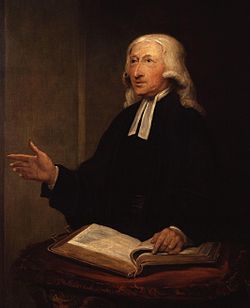 |
| John Wesley, by William Hamilton |
John Wesley was a famous preacher and prolific writer who often sought to make abstract doctrine or obscure Scripture relevant to the everyday lives of the people with whom he ministered. Although a number of sayings attributed to him today are disputed or can be shown to be false, many of them may still be considered true to his teachings. One of those that rings true because it is linked with the General Rules of the United Societies, is this "rule of life":
Do all the good you can,Wesley believed in making the best use of every moment and resource available to us: "Never be triflingly employed" was one of the maxims of his moral code, reflecting his desire to serve God faithfully in every endeavor. In case it's not clear what kind of "good" you're supposed to do, Wesley preached repeatedly on love as the central Christian virtue. In "The Character of a Methodist," as Steve Manskar explains, Wesley describes that
by all the means you can,
in all the ways you can,
in all the places you can,
at all the times you can,
to all the people you can,
as long as ever you can.
[t]he mark of a Methodist is his or her love for God. Their devotion to God is complete. Methodists center their lives upon God who became one of us in Jesus of Nazareth. His life and teachings provide the way Methodists live their love for God in all aspects of life. No part of life is untouched by their devotion to God and the things of God. This means that the Methodist’s love for God compels him or her to love those whom God loves. Their daily life is shaped by obedience to the teachings of Jesus.Manskar, who serves as the Director of Wesleyan Leadership for the General Board of Discipleship, continues,
Methodism is designed to equip people to receive the gift of faith by practicing the discipline of love given in the person and teaching of Jesus Christ. The discipline of love sets them free to become fully the human beings God created them to be, in the image of Christ. The aim of Jesus’ life and teaching is equipping his disciples to participate in his mission in the world.Love God, love those whom God loves (that is, everyone), do all the good you can. Sounds like a pretty good summation of the way of Jesus to me. And a compelling case for taking part in campaigns to end suffering, provide healing, and offer abundant life as we are doing through Imagine No Malaria.
I especially like Manskar's focus that the discipline of love is as much for our own benefit as it is for the benefit of those who receive our loving acts. By loving others, by giving of ourselves, our gifts, our time, our energy, we are set free to become fully who God has created us to be, set free to be transformed more into the image of Christ. Jesus' mission in the world is not just for the sake of those who have less, those who are suffering, but it is liberating and transformative for all who participate in it, both as givers and as receivers - and if we do it well, I think we experience both sides of that equation in the same action.
So have you done all the good you can today? Consider joining us in doing good in Africa as we seek to end malaria deaths and bring healing in Jesus' name. You might find yourself set free in the process.
P.S. You can read more about John Wesley at the Wesley Center Online, the Wikipedia article, or you might try Wesley and the People Called Methodists, by Richard P. Heitzenrater, for a fuller account.
Tuesday, March 5, 2013
"Whatever happened to Nothing But Nets?"
As I meet with United Methodists at District Conferences and other gatherings across the Rocky Mountain Conference, a few questions keep coming up, often from people who are very committed to missions and service through the church. One in particular that seems worth clarifying is, "Whatever happened to Nothing But Nets?"
 Nothing But Nets, of course, is a campaign of the United Nations Foundation in partnership with the National Basketball Association/NBA Cares, The United Methodist Church, and several others. Begun in 2006, it brought malaria back into the public eye in the U.S., where a concentrated public health campaign all but eradicated malaria more than 60 years ago. "Send a net. Save a life." became a rallying cry to educate the U.S. public about how easy and affordable it is to support widespread malaria prevention in Africa (for just $10, an insecticide-treated bed net can protect up to four members of a family from malaria-infected mosquito bites for several years). Nothing But Nets was very successful, raising about $7.5 million in the first three years.
Insecticide-treated mosquito nets are still the best way to prevent malaria; however, other measures like draining standing water where the insects breed, trimming foliage and proper sanitation, are also critical. And while "nothing but net" is a great phrase in basketball, when it comes to malaria, prevention is only one piece of the puzzle. In other words, you want nets plus medication, hospital infrastructure, community education, and mass communication efforts.
And so, in 2008, building on the success of Nothing But Nets, and with the assistance of grant funding from the United Nations Foundation and (later) the Bill and Melinda Gates Foundation, the UMC created a new, comprehensive program to fight malaria: Imagine No Malaria. It both continues the important preventive work of net distribution and builds on it, adding treatment, education, and communication strategies to bring about a sustainable victory over malaria in this generation.
The new goal is to multiply the impact of Nothing But Nets tenfold: to raise $75 million in gifts and pledges by 2015. This audacious goal has the potential to save millions of lives - mostly women and children, who are the most vulnerable and make up the majority of deaths from the disease - and to make it possible for millions more who would have lived with and suffered from malaria to have a more abundant life in Jesus' name.
Confusion arises because while Imagine No Malaria is the new focus for United Methodist efforts to fight malaria, Nothing But Nets still exists and is still active, and for some churches, it is still a meaningful outlet for fundraising and malaria awareness efforts. Gifts made to Nothing But Nets through a local United Methodist Church count toward the broader goal of reducing deaths from malaria, but they are not counted toward conference fundraising goals for Imagine No Malaria.* The UN Foundation has helped the UMC clarify that through Imagine No Malaria we are engaged in a new, more comprehensive initiative as a denomination, rather than partnering with the non-profit Nothing But Nets to focus on distributing bed nets only for prevention.
Given these options, I invite you to prayerfully consider how God might be leading you and your congregation to respond to Jesus' teachings to heal the sick and to care for "the least of these." Perhaps, with God's help, you can do more than you realize.
And however you are raising money to save lives, please drop me a line at the Conference office to let me know how your church is taking part in the work to end death and suffering from malaria - email kerry[at]rmcumc.com or call 303-733-3736 x152. Blessings on your work to help others live life to the fullest!
*This post originally stated incorrectly that gifts to Nothing But Nets do count towards Imagine No Malaria fundraising goals. Updated 4/11/13.
Insecticide-treated mosquito nets are still the best way to prevent malaria; however, other measures like draining standing water where the insects breed, trimming foliage and proper sanitation, are also critical. And while "nothing but net" is a great phrase in basketball, when it comes to malaria, prevention is only one piece of the puzzle. In other words, you want nets plus medication, hospital infrastructure, community education, and mass communication efforts.
And so, in 2008, building on the success of Nothing But Nets, and with the assistance of grant funding from the United Nations Foundation and (later) the Bill and Melinda Gates Foundation, the UMC created a new, comprehensive program to fight malaria: Imagine No Malaria. It both continues the important preventive work of net distribution and builds on it, adding treatment, education, and communication strategies to bring about a sustainable victory over malaria in this generation. The new goal is to multiply the impact of Nothing But Nets tenfold: to raise $75 million in gifts and pledges by 2015. This audacious goal has the potential to save millions of lives - mostly women and children, who are the most vulnerable and make up the majority of deaths from the disease - and to make it possible for millions more who would have lived with and suffered from malaria to have a more abundant life in Jesus' name.
Confusion arises because while Imagine No Malaria is the new focus for United Methodist efforts to fight malaria, Nothing But Nets still exists and is still active, and for some churches, it is still a meaningful outlet for fundraising and malaria awareness efforts. Gifts made to Nothing But Nets through a local United Methodist Church count toward the broader goal of reducing deaths from malaria, but they are not counted toward conference fundraising goals for Imagine No Malaria.* The UN Foundation has helped the UMC clarify that through Imagine No Malaria we are engaged in a new, more comprehensive initiative as a denomination, rather than partnering with the non-profit Nothing But Nets to focus on distributing bed nets only for prevention.
|
| Children greet Bishop Elaine and other members of the UMC delegation to distribute nets in Bom Jesus, Angola, in 2012 |
And however you are raising money to save lives, please drop me a line at the Conference office to let me know how your church is taking part in the work to end death and suffering from malaria - email kerry[at]rmcumc.com or call 303-733-3736 x152. Blessings on your work to help others live life to the fullest!
*This post originally stated incorrectly that gifts to Nothing But Nets do count towards Imagine No Malaria fundraising goals. Updated 4/11/13.
Tuesday, February 26, 2013
What gift can you bring?
 Ministry isn't just what a pastor does on Sundays, or even what pastors - or missionaries, or chaplains - do all week. The word ministry has Latin roots, and its origins meant service. In the context of the Protestant church, ministry might be defined as "the service to others that followers of Jesus perform in the name and Spirit of Christ."
Imagine No Malaria is one of the ways that The United Methodist Church seeks to serve others, offering them abundant life in Jesus' name. The community health workers, doctors and nurses, administrators of in-country health boards, communication professionals and many others who are on the ground to provide services in Africa are all engaged in ministry, whether they think about it that way or not. All of them are part of an effort to allow many more people to live life to the fullest, as God desires.
But they're not the only ones doing ministry through Imagine No Malaria. As we work to raise awareness and educate people here in the U.S. about malaria, its devastating effects on individuals and communities in Africa, and the opportunity we have to end preventable deaths and suffering from malaria in this generation, we need people to get involved who have a variety of backgrounds and a wide range of gifts. Whether you are a teacher, a custodian, an architect, an administrative assistant, a software engineer, or a scientist, you have something to offer.
 |
| Mosquitoes look scarier under a microscope |
Bishop Stanovsky,
I am very excited and glad that the United Methodist Church is taking a big leap to help people afflicted with malaria.
Malaria, as you probably already know, is a very difficult disease to control and the plasmodium parasite is a very fastidious one due to its different forms in its life cycle. A lot of research is ongoing but people are dying daily because a cure has not been found and the mosquito vectors are becoming resistant to the available chemical insecticides.
Meanwhile, it is harder and harder to conduct research because federal grant money is drying up due to the decline in our economy. Therefore, I think it is important for the people of God to step up to the plate to help other people of God who are suffering.
I think an integrated approach that the Imagine No Malaria campaign is taking is an important one due to the prolific nature of this parasite and its mosquito vector. I think it is very important that the church be exposed to the ongoing problem of malaria and be given the opportunity to respond financially (and other ways – prayer, resources, physical help etc.) because this is a disease that has plagued the third world countries where financial resources are very low.
I believe we, the church, can make a difference!
Blessings,What gifts can you bring? Can you make phone calls or send emails? Give a presentation? Can you work behind the scenes to plan a community engagement event with your church? Whatever your area of training or expertise, if you have a passion for this ministry, I am confident we can find a way to use your gifts to help save lives in Jesus' name. Comment below if you want to learn more or be trained as a volunteer!
Cynthia
Cynthia (Khoo) Paquette, Ph.D.
Infectious Disease Annex
Department of Microbiology, Immunology and Pathology
Colorado State University
Tuesday, February 12, 2013
Launching into Lent
Did you miss the official campaign launch for Imagine No Malaria in the Rocky Mountain Conference? For the thousands of United Methodists in Colorado, Utah, and Wyoming who were not able to be present at the Youth Leadership Conference on January 25, we have a video snapshot to give you a taste of the presentation (our thanks to Myranda Hoffman, RMC Communications Specialist, who did the video editing!):
This is just a glimpse of the information and stories shared that night by Becca Fenton, Rev. Mike Dent, Becky Buxton, and Bishop Elaine Stanovsky. The Rocky Mountain Conference has committed to raising $1.2 million toward the denomination's overall goal of $75 million. This represents 120,000 lives saved, but the truth is that our impact will last longer and stretch further than this fraction of the 655,000 people who die from malaria each year.
Because Imagine No Malaria takes a comprehensive approach, including prevention, treatment, education, and communication, our gifts and efforts become part of sustainable, empowering, locally-led work to eradicate malaria as a source of suffering and death in Africa. This is long-term, life-saving, kingdom-building work that we do in the name of Jesus Christ, who came that all people might have abundant life.
Tomorrow, we enter into the season of Lent, a time of examining our spiritual lives, identifying what separates us from God, and seeking to follow the footsteps of Jesus more closely and intentionally. If you are taking on a spiritual discipline such as prayer or fasting, I invite you to consider connecting it with an action that has tangible impact on the lives of our sisters and brothers in God's family. That could be as simple as setting aside $10 a week to donate to Imagine No Malaria instead of eating out; or telling one new person each week about The United Methodist Church's extraordinary work to bring healing to families and communities in Africa. For more ideas, check out the Imagine No Malaria Lenten Devotional.
If you want to learn more, and especially if you have experience with malaria or if you have a heart for the people of Africa and are eager to get involved, call 303-733-3736 x152 or email kerry@rmcumc.com to find out how you can join the campaign as a volunteer.
Watch this space in the coming days for details on the different volunteer roles available and what it means become an Ambassador, district organizer, or local church leader!
This is just a glimpse of the information and stories shared that night by Becca Fenton, Rev. Mike Dent, Becky Buxton, and Bishop Elaine Stanovsky. The Rocky Mountain Conference has committed to raising $1.2 million toward the denomination's overall goal of $75 million. This represents 120,000 lives saved, but the truth is that our impact will last longer and stretch further than this fraction of the 655,000 people who die from malaria each year.
Because Imagine No Malaria takes a comprehensive approach, including prevention, treatment, education, and communication, our gifts and efforts become part of sustainable, empowering, locally-led work to eradicate malaria as a source of suffering and death in Africa. This is long-term, life-saving, kingdom-building work that we do in the name of Jesus Christ, who came that all people might have abundant life.
Tomorrow, we enter into the season of Lent, a time of examining our spiritual lives, identifying what separates us from God, and seeking to follow the footsteps of Jesus more closely and intentionally. If you are taking on a spiritual discipline such as prayer or fasting, I invite you to consider connecting it with an action that has tangible impact on the lives of our sisters and brothers in God's family. That could be as simple as setting aside $10 a week to donate to Imagine No Malaria instead of eating out; or telling one new person each week about The United Methodist Church's extraordinary work to bring healing to families and communities in Africa. For more ideas, check out the Imagine No Malaria Lenten Devotional.
If you want to learn more, and especially if you have experience with malaria or if you have a heart for the people of Africa and are eager to get involved, call 303-733-3736 x152 or email kerry@rmcumc.com to find out how you can join the campaign as a volunteer.
Watch this space in the coming days for details on the different volunteer roles available and what it means become an Ambassador, district organizer, or local church leader!
Thursday, February 7, 2013
Pauley Perrette wants you to help her catch a killer
Pauley Perrette, star of TV's hit show NCIS, is a supporter of Imagine
No Malaria.
If you want to help catch this killer in the dark, visit ImagineNoMalaria.org to learn more, pray, donate, or get ideas for organizing your church or community group.
If you're in Colorado, Utah, or Wyoming, contact Rev. Kerry Greenhill at the Rocky Mountain Conference of The United Methodist Church (kerry@rmcumc.com or 303-733-3736 x152) to learn more about how you can get involved.
*This PSA was recorded about a year ago, when malaria took the life of a child in Africa every 45 seconds. Today, that rate has dropped further, so that a child dies every 60 seconds. That's still too many children who die needlessly each day from a preventable, treatable, and beatable disease, but it means we are making progress. Together, we can end unnecessary death and suffering from malaria in our lifetime.
If you want to help catch this killer in the dark, visit ImagineNoMalaria.org to learn more, pray, donate, or get ideas for organizing your church or community group.
If you're in Colorado, Utah, or Wyoming, contact Rev. Kerry Greenhill at the Rocky Mountain Conference of The United Methodist Church (kerry@rmcumc.com or 303-733-3736 x152) to learn more about how you can get involved.
*This PSA was recorded about a year ago, when malaria took the life of a child in Africa every 45 seconds. Today, that rate has dropped further, so that a child dies every 60 seconds. That's still too many children who die needlessly each day from a preventable, treatable, and beatable disease, but it means we are making progress. Together, we can end unnecessary death and suffering from malaria in our lifetime.
Tuesday, February 5, 2013
Ripples in the water
“We are caught in an inescapable network of mutuality, tied in a single garment of destiny. Whatever affects one directly, affects all indirectly.”- Martin Luther King, Jr.
Do you know how much power you have to affect the lives of others?
Depending on how your day is going, you may see yourself as powerless, or too easily affected by the words, attitudes, or actions of other people. Or you may be all too aware that the decisions you make - in parenting, in friendship or a romantic relationship, in the workplace - can make a dramatic difference for those around you.
 |
| Image courtesy of zirconicusso / FreeDigitalPhotos.net |
Little children, let us love, not in word or speech, but in truth and action.
One of the blessings of a movement like Imagine No Malaria is that it offers a concrete and meaningful way to harness the energy of interdependence, to turn good intentions into actions that can literally heal people and save lives. If you spend $10 on lunch or a movie ticket, you may or may not remember how you spent the money a year from now. But if you give that same $10 to pay for the cost of an insecticide-treated bed net, you're helping keep a family of four safe from malaria-spreading mosquito bites for up to five years.- 1 John 3:18
That's five years when children are in school regularly and parents don't have to miss work, when there are no unexpected and arduous trips on foot to a clinic ten or twenty miles away to seek treatment. And of course, bed nets are only one part of the story; your $10 (or $25, or $100, or...?) could help provide rapid diagnostic kits or life-saving medication for a clinic or hospital; larger gifts can help train and support community health workers who visit villages to build relationships, assess the need, and explain the importance of bed nets and prompt treatment of symptoms; initiate radio programs that raise public awareness of malaria prevention and treatment; or much more.
“It is from numberless diverse acts of courage and belief that human history is shaped. Each time a [person] stands up for an ideal, or acts to improve the lot of others, or strikes out against injustice, he [or she] sends forth a tiny ripple of hope.”
- Robert F. Kennedy
What kind of ripples are you sending out into the world this week? Would you consider some small action - telling a friend or church group about Imagine No Malaria, making a donation, calling your Congressperson to support continued global health funding - to help save the lives of children and pregnant women who are most vulnerable to malaria? If you're not sure where to start, the Lenten devotional booklet compiled by INM staff has some great suggestions for simple actions you can take, each Friday during Lent. Together, we can make a difference.
P. S. You can donate now (or at any time) at the Rocky Mountain Conference website - enter the amount you wish to give in the Imagine No Malaria box, and at the bottom of the screen, choose whether you want to give once, weekly, or monthly. Or you can give directly through Imagine No Malaria; just make sure to indicate which church, district, or conference you want to receive credit.
P. S. You can donate now (or at any time) at the Rocky Mountain Conference website - enter the amount you wish to give in the Imagine No Malaria box, and at the bottom of the screen, choose whether you want to give once, weekly, or monthly. Or you can give directly through Imagine No Malaria; just make sure to indicate which church, district, or conference you want to receive credit.
Subscribe to:
Posts (Atom)