Thursday, April 4, 2013

Campaign updates and a friendly competition

Photo by Karen Stoffers Pugh
Christ is risen!
He is risen indeed!

I hope that your Easter celebration included some experience of Resurrection and new life, whether that looked like spring flowers blooming, healing of past pain, new personal or professional opportunities, forgiveness and letting go, the joy of children's energy and innocence, or some other miracle, large or small. As we enter the season of Eastertide, I want to let you know how things are going with the Imagine No Malaria campaign in the Rocky Mountain Conference.

As of February 28, 2013 (the last month for which donations received at the Nashville campaign headquarters have been tallied), RMCUMC is credited with bringing in $42,127.89 to Imagine No Malaria directly, in addition to the $125,673.32 donated in honor of Bishop and Mrs. Brown that was used to purchase bed nets for distribution in Angola last year. In addition, individual members and leaders have pledged another $16,810.00 over the next year. That brings us to $184,611.21 raised, or about 15.4% of our total goal. (We know that a number of additional contributions are en route.)

So far, at least 45 churches in our conference have either taken an offering or been represented by trackable individual donations. The largest amounts sent in so far come from:
  • Grand Junction First: $4,000
  • Casper First: $1,335
  • Arvada: $1,311
  • Newcastle First: $1,025
  • Montrose First: $1,016
  • Windsor First: $1,000
When the amount sent in is divided by the church's average weekly attendance for 2012, the largest donations per capita so far are from:
  • Newcastle First:                      $14.44/attendee          (4.58/member)
  • Wheatland:                              $13.11/attendee          ($7.02/member)
  • Grand Junction First:             $12.94/attendee           ($4.55/member)
  • Johnson Memorial, Dolores:   $9.36/attendee            ($3.38/member)
  • Ovid:                                       $9.01/attendee            ($5.54/member)
  • Estes Park:                              $8.41/attendee            ($5.43/member)
  • Windsor First:                         $7.58/attendee            ($4.98/member)
We are off to a great start! Three churches have already reached the level of saving one life per worship attendee ($10). And First UMC in Casper, Wyoming, is the first RMC church to notify us of their official fundraising goal ($11,000).  

Now is the time to start building even greater momentum; our goal of $1.2 million given or pledged by April 2014 requires an average of $20 per UMC member in our conference, or $40 per worship attendee.

To try to spread their enthusiasm for the life-saving mission of Imagine No Malaria, two pastors in Utah are challenging the other members of their sub-district to a little friendly competition.

Rev. Olga Hard of Mountain Vista UMC in West Jordan, and Rev. Dennis Shaw of Hilltop UMC in Sandy, have proposed that the Utah church that raises the highest dollar amount per capita (based on 2012 average weekly attendance) between April 1 and September 30, 2013, will receive a certificate, will be featured on this blog and in RMC News, and will have "bragging rights" - in addition to the satisfaction of transforming lives and communities in Africa! Rev. Shaw clarifies, "Money has to be sent to the RMC and is for money sent during the period of competition."

If any other (sub-)districts are interested in establishing their own competition, please let me know! We will be announcing campaign results to date at Annual Conference this June, and since the Rocky Mountain Conference campaign continues through spring of 2014, there is still time to make plans for congregational education and awareness-raising efforts, community engagement events, and other creative activities.

Check out the latest news article on ImagineNoMalaria.org about the diverse approaches churches in the Holston Conference are taking, and help us change lives and make history as together we seek to end preventable deaths from malaria in Africa!

Tuesday, March 26, 2013

Holy Week, Holy Work

This is Holy Week.

Christians around the world are journeying together in a variety of ways, recalling the final days of Jesus' life, from his "triumphal entry" (or anti-empire protest march) into Jerusalem, through the celebration of the Passover meal with his disciples, through his arrest, trial, and crucifixion.

It is a week that many experience as heavy with meaning and remembrance, overshadowed by the betrayal, violence, fear, and grief that Jesus and his followers experienced. In my five years in pastoral leadership in the local church, and twelve years of worship design and leadership, it was always one of the hardest and most sacred times to be a leader of the Christian community. The darkness becomes almost palpable, even two thousand years later, even for those of us living in comfort and affluence, even when the weather is sunny and warm, even when we know how the story ends.

It is the week that changes everything.

Artwork is mixed media collage, created by
Jessica Miller Kelley in 2006, photographs ©2013.
Downloaded from MinistryMatters.com.

Because on Sunday, after all that darkness and sorrow, we rise to the Good News that Christ is alive and goes before us. We remember those long-ago disciples and their experience of Resurrection, and we celebrate the truth that hate and fear do not have the final word; love does. Evil may seem to be all around, but ultimately, good triumphs. Death is still and always a reality in our world, but it is not the deepest reality: Life is what God desires, life abundant and eternal, life transformed by love, life made in the image of our Creator, life expressed by following in the footsteps of our Redeemer, life sustained by the nourishment and guidance of the Holy Spirit, that blows where it will and cannot be stopped or restrained.

This is a Holy Week, and it is right to make time for prayer and worship with the gathered community to recall and proclaim these stories, these experiences, together.

But even in the midst of this holy time, there is work to be done: reports to write, children to pick up from school, data to analyze, buildings to construct, food to prepare, seeds to plant, burst pipes to repair... bed nets to hang, rapid diagnostic kits to distribute, community health workers to train, school children to educate, medications to administer, radio programs to broadcast, funds to raise, communities to engage, voices to lift up on behalf of the voiceless, to speak out for those who are poor and vulnerable, to cry out for justice and proclaim the good news of God's love, of God's desire for abundant life for all people.


In the midst of this Holy Week, may your work - paid or volunteer, professional or personal - become part of the ongoing ministry of Jesus, to proclaim the good news and to build the kin'dom of heaven, the reign of God's love and justice in our midst, here and now, making Resurrection and abundant life possible for all people and all creation.

And if you'd like to join us in partnering with the people of Africa to make abundant life more accessible for millions of God's children by eliminating preventable deaths from malaria, call 303-733-3736 x152 or email kerry [at] rmcumc [dot] com. Death will not have the final word, this week or for generations to come.

Wednesday, March 20, 2013

Do all the good you can

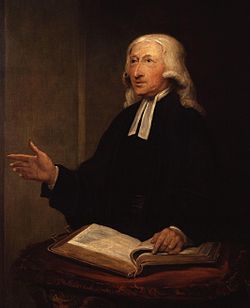
John Wesley, by William Hamilton
When United Methodists want to check whether we're on a path that is consistent with our theological heritage, we often turn to the writings and accounts of John Wesley, the 18th-century English priest who, together with his brother Charles, is considered the founder of the Methodist movement.

John Wesley was a famous preacher and prolific writer who often sought to make abstract doctrine or obscure Scripture relevant to the everyday lives of the people with whom he ministered. Although a number of sayings attributed to him today are disputed or can be shown to be false, many of them may still be considered true to his teachings. One of those that rings true because it is linked with the General Rules of the United Societies, is this "rule of life":
Do all the good you can,
by all the means you can,
in all the ways you can,
in all the places you can,
at all the times you can,
to all the people you can,
as long as ever you can.
Wesley believed in making the best use of every moment and resource available to us: "Never be triflingly employed" was one of the maxims of his moral code, reflecting his desire to serve God faithfully in every endeavor. In case it's not clear what kind of "good" you're supposed to do, Wesley preached repeatedly on love as the central Christian virtue. In "The Character of a Methodist," as Steve Manskar explains, Wesley describes that
[t]he mark of a Methodist is his or her love for God. Their devotion to God is complete. Methodists center their lives upon God who became one of us in Jesus of Nazareth. His life and teachings provide the way Methodists live their love for God in all aspects of life. No part of life is untouched by their devotion to God and the things of God. This means that the Methodist’s love for God compels him or her to love those whom God loves. Their daily life is shaped by obedience to the teachings of Jesus.
Manskar, who serves as the Director of Wesleyan Leadership for the General Board of Discipleship, continues,
Methodism is designed to equip people to receive the gift of faith by practicing the discipline of love given in the person and teaching of Jesus Christ. The discipline of love sets them free to become fully the human beings God created them to be, in the image of Christ. The aim of Jesus’ life and teaching is equipping his disciples to participate in his mission in the world.
Love God, love those whom God loves (that is, everyone), do all the good you can. Sounds like a pretty good summation of the way of Jesus to me. And a compelling case for taking part in campaigns to end suffering, provide healing, and offer abundant life as we are doing through Imagine No Malaria.

I especially like Manskar's focus that the discipline of love is as much for our own benefit as it is for the benefit of those who receive our loving acts. By loving others, by giving of ourselves, our gifts, our time, our energy, we are set free to become fully who God has created us to be, set free to be transformed more into the image of Christ. Jesus' mission in the world is not just for the sake of those who have less, those who are suffering, but it is liberating and transformative for all who participate in it, both as givers and as receivers - and if we do it well, I think we experience both sides of that equation in the same action.

So have you done all the good you can today? Consider joining us in doing good in Africa as we seek to end malaria deaths and bring healing in Jesus' name. You might find yourself set free in the process.


P.S. You can read more about John Wesley at the Wesley Center Online, the Wikipedia article, or you might try Wesley and the People Called Methodists, by Richard P. Heitzenrater, for a fuller account.

Thursday, March 14, 2013

Looking for resources?

If you want to take part in Imagine No Malaria in the Rocky Mountain Conference, we want you to have access to the resources you need as quickly as possible! With that in mind, there is a new page here on the blog about how you can get involved, either as an individual or as a church leader.

You can also check out the latest Malaria Fact Sheet and Imagine No Malaria Ministry Overview.

In the coming weeks, we will be posting even more resources for you to view and download, but in the meantime, please feel free to contact Rev. Kerry Greenhill, Field Coordinator, at 303-733-3736 (Tues - Thurs) or by email at kerry [at] rmcumc [dot] com with any questions.

Rev. Mike Dent, Senior Pastor of Trinity UMC, Denver, helps
distribute bed nets in Angola in October 2012
.
We are making a difference, offering health and healing to millions of people in Africa in the name and spirit of Jesus Christ, the Savior who came to show that God wants all people to be able to live life to the fullest - but we need your help to reach our goal of ending malaria deaths in this generation! Won't you join us?

Tuesday, March 5, 2013

"Whatever happened to Nothing But Nets?"

As I meet with United Methodists at District Conferences and other gatherings across the Rocky Mountain Conference, a few questions keep coming up, often from people who are very committed to missions and service through the church. One in particular that seems worth clarifying is, "Whatever happened to Nothing But Nets?"

Nothing But Nets, of course, is a campaign of the United Nations Foundation in partnership with the National Basketball Association/NBA Cares, The United Methodist Church, and several others. Begun in 2006, it brought malaria back into the public eye in the U.S., where a concentrated public health campaign all but eradicated malaria more than 60 years ago. "Send a net. Save a life." became a rallying cry to educate the U.S. public about how easy and affordable it is to support widespread malaria prevention in Africa (for just $10, an insecticide-treated bed net can protect up to four members of a family from malaria-infected mosquito bites for several years). Nothing But Nets was very successful, raising about $7.5 million in the first three years.

Insecticide-treated mosquito nets are still the best way to prevent malaria; however, other measures like draining standing water where the insects breed, trimming foliage and proper sanitation, are also critical. And while "nothing but net" is a great phrase in basketball, when it comes to malaria, prevention is only one piece of the puzzle. In other words, you want nets plus medication, hospital infrastructure, community education, and mass communication efforts.

And so, in 2008, building on the success of Nothing But Nets, and with the assistance of grant funding from the United Nations Foundation and (later) the Bill and Melinda Gates Foundation, the UMC created a new, comprehensive program to fight malaria: Imagine No Malaria. It both continues the important preventive work of net distribution and builds on it, adding treatment, education, and communication strategies to bring about a sustainable victory over malaria in this generation. 

The new goal is to multiply the impact of Nothing But Nets tenfold: to raise $75 million in gifts and pledges by 2015. This audacious goal has the potential to save millions of lives - mostly women and children, who are the most vulnerable and make up the majority of deaths from the disease - and to make it possible for millions more who would have lived with and suffered from malaria to have a more abundant life in Jesus' name.

Confusion arises because while Imagine No Malaria is the new focus for United Methodist efforts to fight malaria, Nothing But Nets still exists and is still active, and for some churches, it is still a meaningful outlet for fundraising and malaria awareness efforts. Gifts made to Nothing But Nets through a local United Methodist Church count toward the broader goal of reducing deaths from malaria, but they are not counted toward conference fundraising goals for Imagine No Malaria.*  The UN Foundation has helped the UMC clarify that through Imagine No Malaria we are engaged in a new, more comprehensive initiative as a denomination, rather than partnering with the non-profit Nothing But Nets to focus on distributing bed nets only for prevention.

Children greet Bishop Elaine and other members of the UMC
delegation to distribute nets in Bom Jesus, Angola, in 2012
Given these options, I invite you to prayerfully consider how God might be leading you and your congregation to respond to Jesus' teachings to heal the sick and to care for "the least of these." Perhaps, with God's help, you can do more than you realize.

And however you are raising money to save lives, please drop me a line at the Conference office to let me know how your church is taking part in the work to end death and suffering from malaria - email kerry[at]rmcumc.com or call 303-733-3736 x152. Blessings on your work to help others live life to the fullest!


*This post originally stated incorrectly that gifts to Nothing But Nets do count towards Imagine No Malaria fundraising goals. Updated 4/11/13.

Tuesday, February 26, 2013

What gift can you bring?

Ministry isn't just what a pastor does on Sundays, or even what pastors - or missionaries, or chaplains - do all week. The word ministry has Latin roots, and its origins meant service. In the context of the Protestant church, ministry might be defined as "the service to others that followers of Jesus perform in the name and Spirit of Christ."

Imagine No Malaria is one of the ways that The United Methodist Church seeks to serve others, offering them abundant life in Jesus' name. The community health workers, doctors and nurses, administrators of in-country health boards, communication professionals and many others who are on the ground to provide services in Africa are all engaged in ministry, whether they think about it that way or not. All of them are part of an effort to allow many more people to live life to the fullest, as God desires.

But they're not the only ones doing ministry through Imagine No Malaria. As we work to raise awareness and educate people here in the U.S. about malaria, its devastating effects on individuals and communities in Africa, and the opportunity we have to end preventable deaths and suffering from malaria in this generation, we need people to get involved who have a variety of backgrounds and a wide range of gifts. Whether you are a teacher, a custodian, an architect, an administrative assistant, a software engineer, or a scientist, you have something to offer.

Mosquitoes look scarier under
a microscope
We recently heard from Dr. Cynthia Paquette, an Entomologist who is working on malaria-transmitting mosquito research at Colorado State University.  Cynthia is also a Certified Candidate for Ministry (Elder's Orders).  She reached out to offer her gifts to be part of the campaign, and also expressed her conviction of the importance of this work:
Bishop Stanovsky,

I am very excited and glad that the United Methodist Church is taking a big leap to help people afflicted with malaria.

Malaria, as you probably already know, is a very difficult disease to control and the plasmodium parasite is a very fastidious one due to its different forms in its life cycle.  A lot of research is ongoing but people are dying daily because a cure has not been found and the mosquito vectors are becoming resistant to the available chemical insecticides.

Meanwhile, it is harder and harder to conduct research because federal grant money is drying up due to the decline in our economy.  Therefore, I think it is important for the people of God to step up to the plate to help other people of God who are suffering.  

I think an integrated approach that the Imagine No Malaria campaign is taking is an important one due to the prolific nature of this parasite and its mosquito vector.  I think it is very important that the church be exposed to the ongoing problem of malaria and be given the opportunity to respond financially (and other ways – prayer, resources, physical help etc.) because this is a disease that has plagued the third world countries where financial resources are very low.

I believe we, the church, can make a difference!
Blessings,
Cynthia

Cynthia (Khoo) Paquette, Ph.D.
Infectious Disease Annex
Department of Microbiology, Immunology and Pathology
Colorado State University
What gifts can you bring? Can you make phone calls or send emails? Give a presentation? Can you work behind the scenes to plan a community engagement event with your church? Whatever your area of training or expertise, if you have a passion for this ministry, I am confident we can find a way to use your gifts to help save lives in Jesus' name. Comment below if you want to learn more or be trained as a volunteer!

Tuesday, February 19, 2013

We need YOU!

So you've heard about Imagine No Malaria, maybe you've made a personal donation, and you're wondering what else you're supposed to do about it.

Or perhaps you were really involved with Nothing But Nets, and you're eager to understand how Imagine No Malaria builds on that effort, and increases the impact.

Or maybe you've traveled to Africa on a mission trip and have seen firsthand the poverty that is both a cause and an effect of diseases like malaria, and the needless suffering of entire families and communities.

If you're ready to learn more and find out how to get involved, now is the time to sign up!

In the coming weeks, information about Imagine No Malaria will be presented at each District and Sub-district Conference, and trainings will be scheduled for those who are ready to commit time and energy to either of the following roles:

1. Local Church Leader: Working with the pastor(s) and lay leadership, you are the point person for guiding and encouraging your congregation through a 5-step plan for participation in the campaign.

2. District Organizer: Reaching out to local congregations in your area, you share the 5-step plan, offer resources to guide activity development, and support the churches in organizing and completing their work.

3. District Ambassador: Responding to requests for presentations, you share your passion for this transformational ministry with congregations in your area and invite others to join Imagine No Malaria.

Ready to begin? Call 303-733-3736 x152 or email kerry [at] rmcumc [dot] com to learn more or sign up today! Still thinking about it? Visit http://www.imaginenomalaria.org/go-do/ to find out some other options for getting involved.

Either way, please hold our campaign in prayer as the Rocky Mountain Conference seeks to raise $1.2 million toward saving lives and preventing death and suffering from malaria.